Article for The Breeze Newspaper By Bruce Doorly
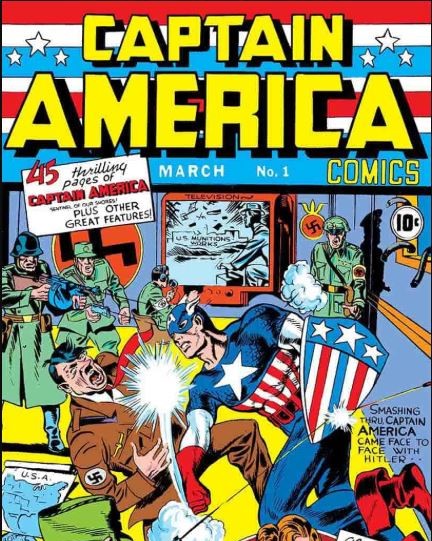
Comic books had exciting, colorful stories of fictional Superheroes, and occasionally real-life heroes, who battled against the Germans and the Japanese.
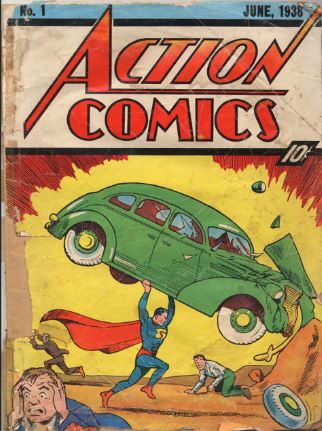
In the mid-1930s, several newspaper comics strips repackaged their old comic strips into booklets and sold them at newsstands for ten cents. Some sold moderately well. That led to the idea that maybe some original material could be written for them.
In 1938, a startup company known as Detective Comics (later DC) decided to do just that – create original comic stories. These stories would be many pages as opposed to the short newspaper comic strips.
Issue Number 1 of their series Action Comics would create a character, invented by writer Jerry Siegel and artist Joe Shuster, called Superman who would ignite the superhero craze - inspiring the creation of dozens of superheroes.
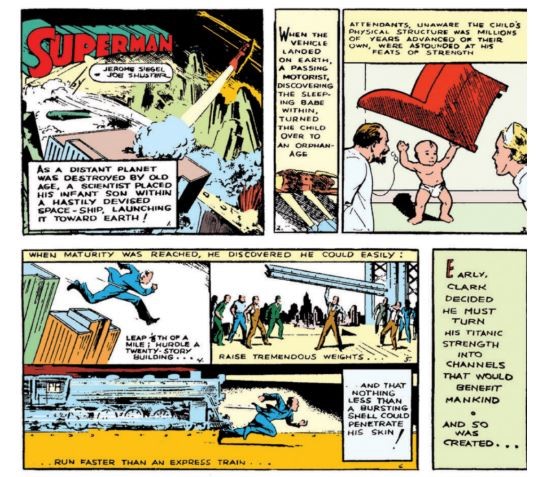
A scientist from a distant dying planet sends his infant son on a spaceship destined for Earth. On Earth a childless couple, the Kents see the crashed spaceship and discover that it has a baby inside.
They adopt him - naming him Clark. They notice that the child possessed extraordinary abilities. When he reached maturity, he could “Hurdle a twenty-story building, raise tremendous weights, and run faster than an express train.” The family decided he would use his abilities for good.
The public took an instant liking to the Superman character. In less than a year he was selling close to a million copies per issue.
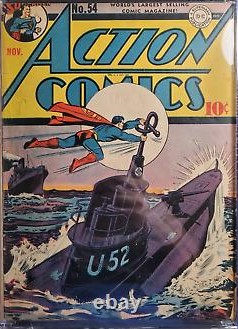
After the U.S. entered the war in December of 1941, the writers of comic books had a challenge. If Superheroes such as Superman did exist, they could have easily ended the war by going overseas and simply capturing Hitler and Hirohito.
So, the writers chose to have the Superheroes (mostly) stay on the home front and defend the U.S. against German and Japanese spies and saboteurs, as well as the occasional German U-boat that lurked off the coastline.
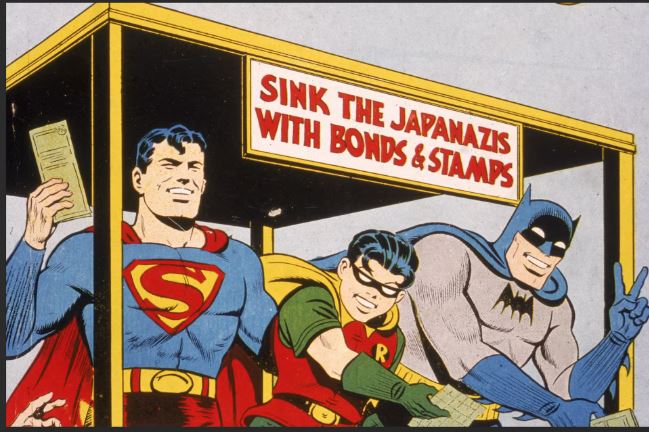
While millions of comic books were read on the home front, millions more were shipped overseas to the troops where they were passed around.
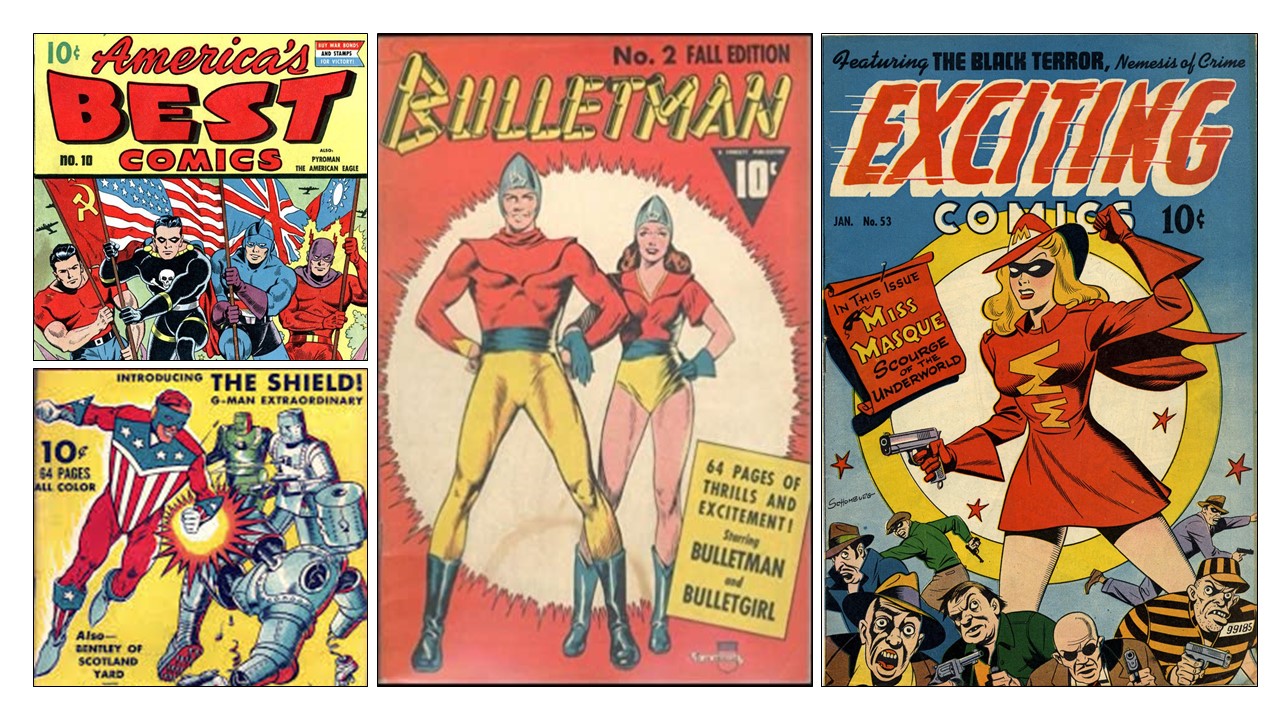
Most Superheroes from the 1940s have faded into history among the general public, but some have endured and thrived throughout the decades, inspiring television shows and movies.
Among them are Captain America, Wonder Woman, and Batman.
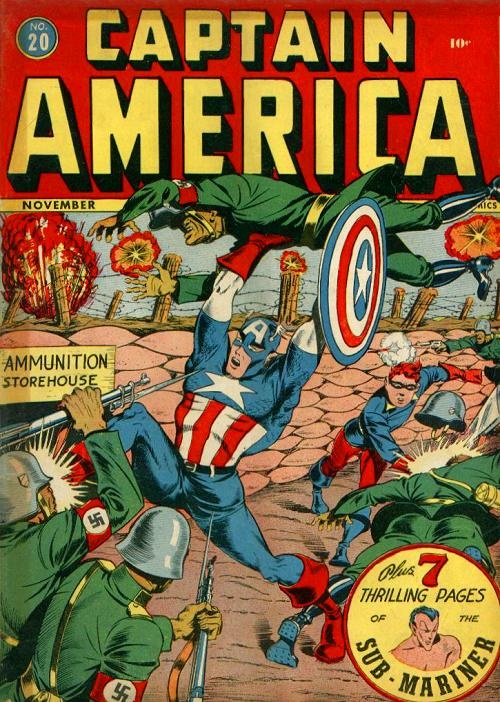
Steve Rogers, a frail young man who is rejected from military service during World War II, volunteers for a secret government experiment aimed at creating super-soldiers. After receiving the Super Soldier Serum he is transformed into a peak human specimen, gaining enhanced strength and agility.
He donned a costume inspired by the American flag and wielded a nearly indestructible shield. As Captain America, Rogers fought on the home front against the Nazi agents. He became a symbol of hope and patriotism, leading missions alongside his sidekick Bucky Barnes.
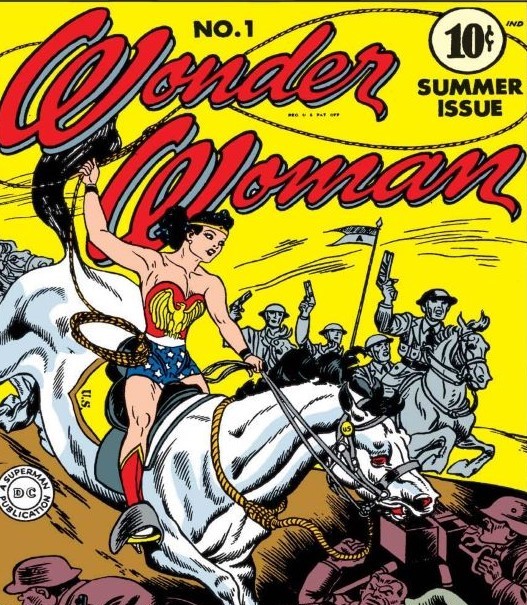
Diana is the daughter of the queen who rules over Paradise Island - an all-women island that is isolated from the rest of the world.
When the American Airforce pilot Steve Trevor is injured in a crash on their island, Diana falls in love with him. After Steve recovered from his injuries, the queen wants to send Steve back to America to continue fighting the war with the island’s most exceptional woman fighter. A competition for the best fighter is held which Diana wins. She leaves the island, travels with Steve to battle the Axis powers and assumes the Superhero known as 'Wonder Woman' and the everyday identity of Diana Prince.
While she is superstrong, most of her superpowers are derived from her equipment. She has an invisible plane, a lasso that makes people trapped inside obey her and tell the truth, and she has bracelets that can block bullets.
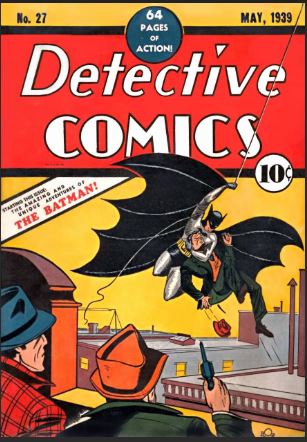
Bruce Wayne is born to two very wealthy Gotham City socialites. He lives a privileged life until the age of eight, when his parents are killed by a criminal on their way home from a movie.
Bruce then swears to dedicate his life to fighting crime. He feels he can best do this as a masked man. He has no superpowers, but is very intelligent, learns to fight, and has a lot of high-tech vehicles and gadgets. In these early years he is a mysterious creature of the night whose actions as a vigilante earns him the suspicion of the police.
His sidekick Robin was introduced in 1940. The Joker and Catwoman also made their debut in 1940, and the Penguin in 1941.
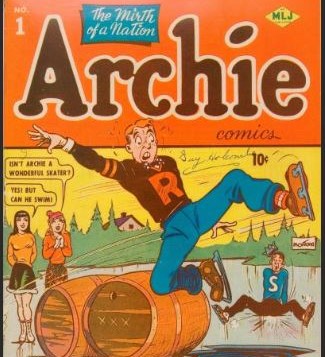
While many other categories of comic books would emerge - western, detective, romance, and horror – the Superheroes dominated during wartime, December 1941 through August 1945.
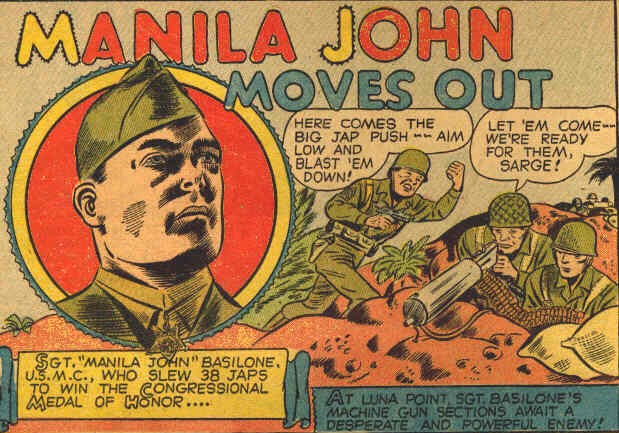
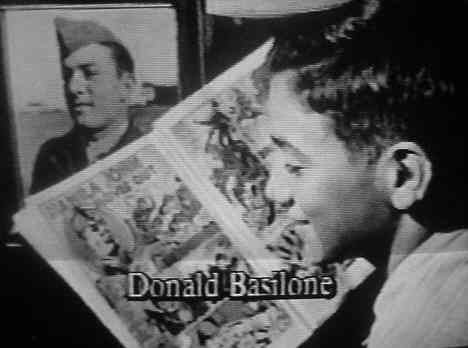
A 10-issue series by Dell Comics called War Heroes featured stories of American war heroes. Each 60-page comic book featured several stories. It was a quarterly series that began with the first cover date of September 1942, and ending in December 1944. Issue #6 featured Basilone’s heroics at Guadalcanal.
Basilone’s story consisted of five pages – four to six panels per page. The title is “Manila John Moves Out.” The opening caption reads “At Luna Point, Sgt. Basilone’s machine gun sections await a desperate and powerful enemy.”
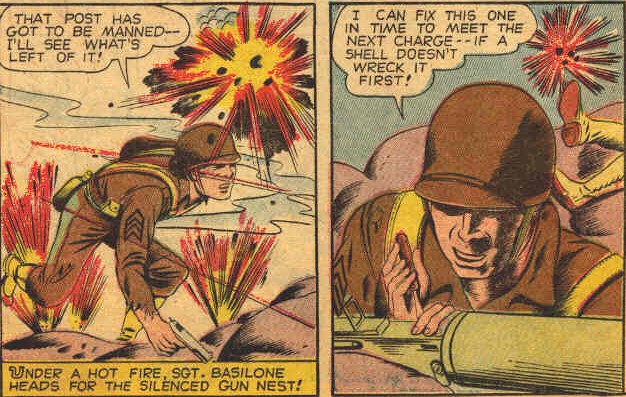
Basilone repairs the machine gun in time for the next Japanese charge. The Japanese attack “again and again,” but Basilone cuts them down leaving piles of corpses – so many that his view is blocked and he must shift his position.
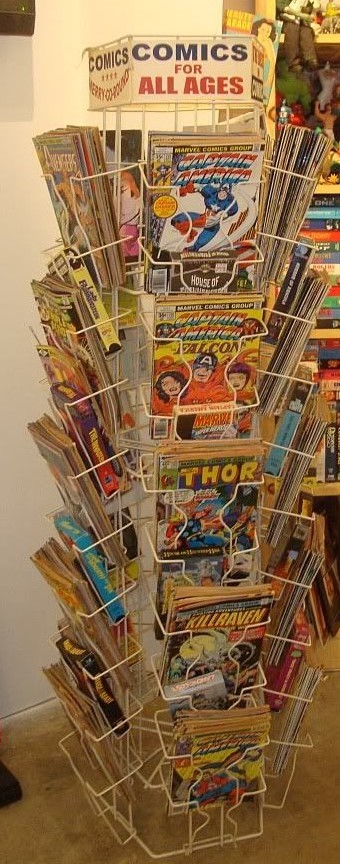
During World War II (1941-1945), there were three stores, all on Somerset Street owned and operated by Raritan residents, where kids would buy comic books for a dime.
All the buildings still stand. Carlino’s Confectionary was at 27 West Somerset Street. Cianciulli’s was at 51 West Somerset Street - it was a newspaper and magazine store that was there for over 40 years. Lastly, Williams Grocery Store at 37 West Somerset Street also stocked comic books.